Earn Starter cashback without staking COCA, using a unified spending account.
Rewards · first band
Starter 1%
Foreign-currency fee
Direct pairs 0%; indirect pairs 0.5–1.5%
Card issuance fee
Virtual $0 / Starter physical $5
Maintenance / subscription
Starter annual fee $0
Keep in mind+
Claims share a $15 monthly cap, wait 14 days, and require manual action; funding becomes a USD/EUR account balance.
Costs and conditions
Card issuance fee
Virtual $0 / Starter physical $5
Maintenance / subscription
Starter annual fee $0
Starter shares a $15 monthly reward-claim cap. Claims open after 14 days and expire 12 months later. The advertised 0% FX applies to direct pairs, not every payment.
Try collateral-backed card spending with a small monthly reward band.
Rewards · first band
1.5% on first $100/month, then 0.5%
Foreign-currency fee
0% Tria + 1% Visa FX
Card issuance fee
Free virtual card
Maintenance / subscription
Current Virtual plan free
Keep in mind+
Self-custody still involves collateral-backed credit and repayment obligations; free Virtual issuance is temporary and current pricing needs confirmation.
Costs and conditions
Card issuance fee
Free virtual card
Maintenance / subscription
Current Virtual plan free
1.5% on the first $100 eligible monthly spend, then 0.5%. Collateral-backed credit and repayment obligations apply. Free virtual issuance is a limited-time offer; check the app price.
An EUR-funded rewards option for eligible Bybit EU users.
Rewards · first band
Base 1%; no monthly cap
Foreign-currency fee
0.5% non-EUR + 0.9% crypto conversion
Card issuance fee
Virtual issuance free; check physical order quote
Maintenance / subscription
No annual card fee
Keep in mind+
Crypto funding adds 0.9% conversion before applicable 0.5% FX; higher reward tiers carry extra conditions and caps.
Costs and conditions
Card issuance fee
Virtual issuance free; check physical order quote
Maintenance / subscription
No annual card fee
Base eligible spend earns 1% without a monthly cap. Higher 2–10% tiers have conditions and caps. Crypto-funded spending adds 0.9% conversion plus applicable FX.
The card that fits you.The terms behind the numbers.
Compare ongoing costs, reward caps and benefits you can actually use. Match the plan and region, with official sources and checked dates alongside the terms.
Use the USDC or USDT you hold for shopping and everyday expenses. Supported cards convert it to regular currency at checkout or when you top up.
Example
If you receive USDC from clients, start with one software subscription you already use. Compare the final debit with selling the same balance and paying through your bank. Separate the steps saved from the money saved. If you must buy crypto first, include that purchase cost.
Before choosing Supported tokens, networks, and conversion fees vary by card.
Eligible purchases can earn rewards in crypto or USDC. Choose a card with reward assets and earning conditions that suit your spending.
Example
Compare rewards you can actually use. On the same $500 purchase budget, caps, excluded merchants and monthly fees change the outcome. Points, tokens and purchase credits are not automatically withdrawable cash. Check where they can be used and when they expire.
Before choosing Check rates, caps, excluded purchases, and tier requirements.
Bring your crypto balance to familiar card payments, from online shopping to spending abroad. Compare virtual cards and Apple Pay or Google Pay support.
Example
For a €40 travel purchase, keep the €40 receipt and the final asset debit. A pending authorization can differ from the settled cost. Keep another payment method for hotel holds or declines, and compare the complete cost with your existing travel card.
Before choosing Eligibility, merchant acceptance, and mobile wallet support vary.
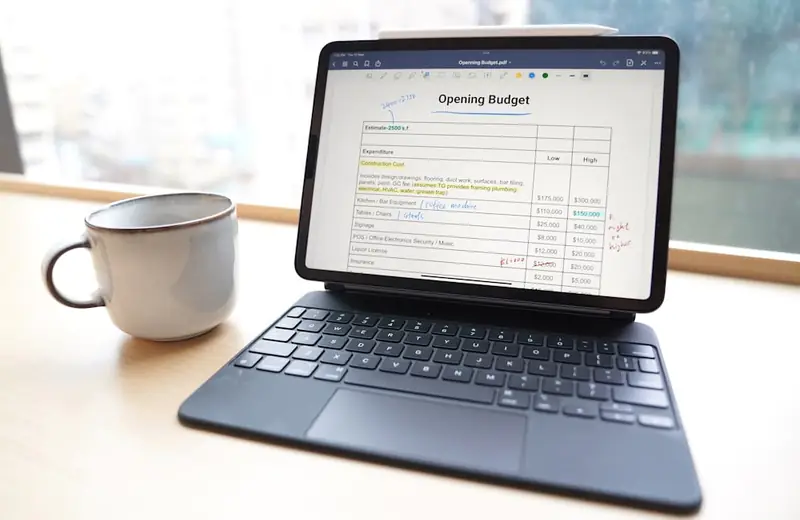
An invented card with $500 monthly spending. Assume every purchase qualifies, rewards are usable and the listed costs are complete. These are not actual product terms.
If your existing card returns 1% with no extra costs, it leaves $5. This invented crypto card leaves $2 less. The $12 issuance fee is paid upfront but allocated over 12 months here. Unknown costs prevent a complete net-benefit figure.
Start with the basics
What should I prepare before applying?
Start with your actual residence and the exact card and tier. Then check identity documents, issuance costs and delivery conditions to avoid surprises during the application.
Being able to register for an app does not mean you qualify for its card. Check the card program's supported residences, age requirements, document-issuing countries and invitation conditions. Reading language is separate from residence. Do not select a travel destination or desired delivery address in place of your actual residence.
2. Prepare the identity information requested
Follow the official application screen for identification, contact details, facial checks and any address evidence. For example, Crypto.com's registration guidance requests a legal name, a government-issued ID image and a selfie. If address evidence is required, check acceptable document types, issue dates and matching names and addresses. Requirements differ by program and region.
3. Check virtual and physical cards separately
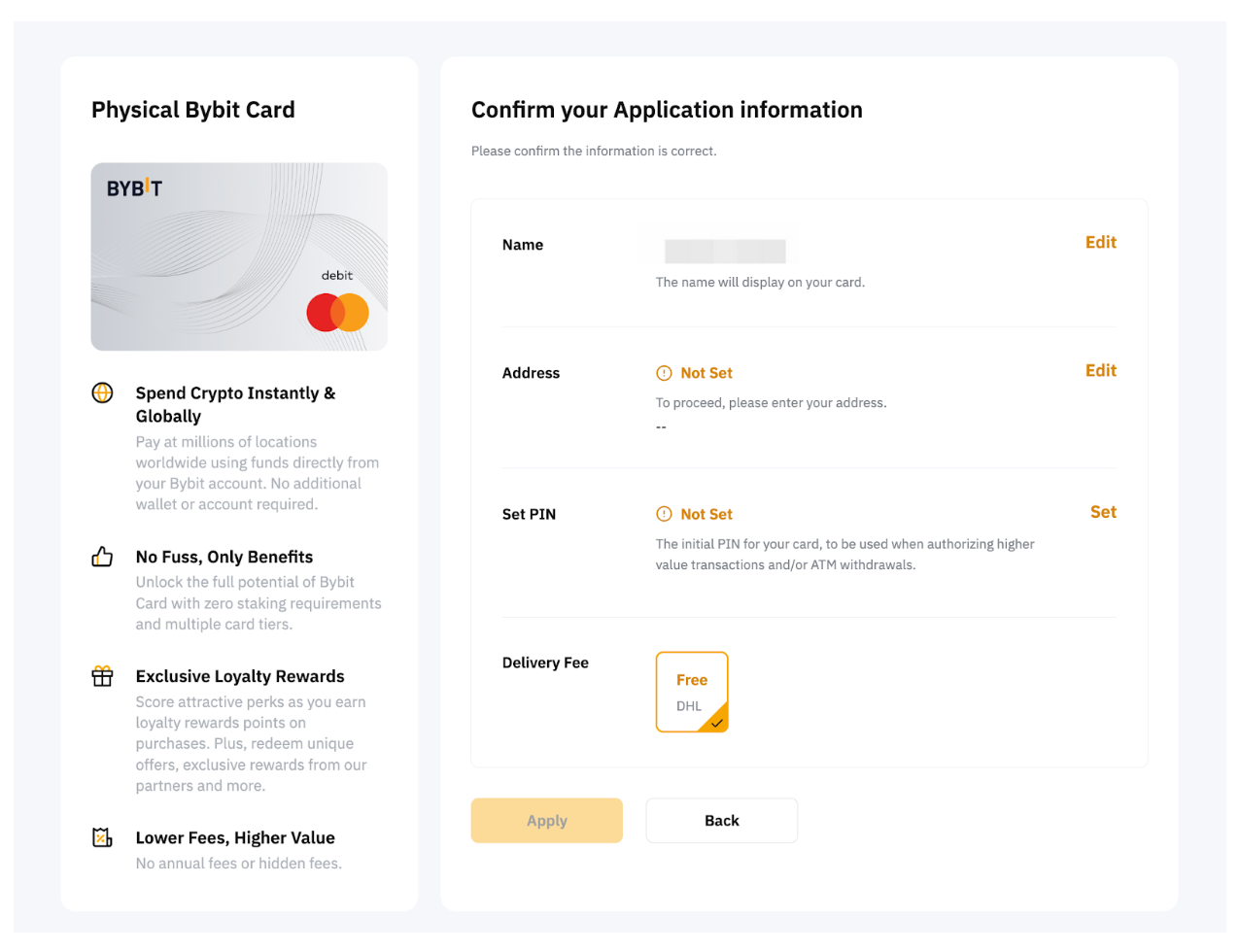
A virtual card may suit online purchases. If you need a physical card, check separate issuance fees, supported delivery countries and addresses, shipping costs and activation after arrival. A free account or membership does not establish free physical-card delivery. For a paid tier, read recurring charges and renewal conditions too.
4. Complete the application through official channels
After comparing candidates here, apply through the product's official site or app. If identity details do not match, follow the correction instructions or contact official support. Before transferring a large balance, establish that your account can actually use the card; do not assume registration means approval.
Official sources
A general checklist based on official guidance. Documents, supported assets, fees and processing times follow your selected card and region.
Cards can use a prepaid balance, eligible funds in a linked wallet or a borrowing limit backed by collateral. If you want to spend your balance directly, check the mode and eligible assets. Borrowing adds interest and collateral-maintenance or liquidation conditions; do not enable it as though it were ordinary prepaid spending.
2. Match both asset and transfer network
Start in the receiving app: confirm the supported asset, network and deposit address, then choose the same combination in the sending exchange or wallet. The name USDC alone does not establish network compatibility. Check minimum deposits, withdrawal fees and any required memo or tag. Use current deposit instructions rather than relying on a previously saved address.
3. Confirm the route with a small eligible transfer
Allow for the minimum deposit and transfer fee, then check that the funds become available for card spending, not just that the sending service marks the transfer complete. Exchange balances, total wallet assets and available card funds may differ. If a transfer is missing, retain its record and transaction ID (TXID) and contact official support instead of repeatedly sending more.

4. Follow one small purchase through settlement
Check that the card is active and make a small everyday purchase. Mobile-wallet support for virtual cards and activation or PIN steps for physical cards vary. Compare the receipt, pending authorization and final debit. Abroad, distinguish local-currency payment from an extra conversion offer. Also separate pending rewards from rewards actually available to claim or use.
Official sources
A general checklist based on official guidance. Documents, supported assets, fees and processing times follow your selected card and region.
Yes. Reward caps, subscriptions, conversion and funding costs change what remains from the same spending. Compare the benefit after costs using your own budget.
Apply the selected tier's earning bands and monthly cap instead of the advertised maximum. Check excluded merchants or transactions and spending thresholds. Points, tokens and purchase credits are not necessarily immediately withdrawable cash: consider the payout asset, minimum claim, waiting period and permitted uses.
2. Add costs from funding through spending
List any crypto purchase cost, exchange withdrawal or network fee, card funding or conversion charge, foreign-currency fee, monthly subscription and issuance cost separately. A 0% fee at one step does not remove costs at the others. You can allocate an annual cost across months for comparison, while keeping its actual payment date clear.
3. Work through an invented $500 example
Assume an invented card earns 2% on all $500 of monthly spending: $10 in rewards. Subtract $3 conversion, $1 transfer, $2 monthly subscription and $1 representing a $12 issuance fee allocated over 12 months. That leaves $3 monthly. An existing card returning 1% with no additional costs would leave $5, or $2 more in this example. These are not actual product terms or guaranteed returns.
4. Keep unresolved costs visible
Do not finalize net benefit when exchange-rate differences, unknown charges or changing token values remain. A merchant's dynamic currency conversion (DCC) can include a separate rate and markup. Choosing local currency does not remove the card's own foreign-currency charges. Compare spending you already plan to make rather than buying more simply to earn rewards.
Official sources
A general checklist based on official guidance. Documents, supported assets, fees and processing times follow your selected card and region.
What if a payment is declined or a refund is late?
Identify the transaction status first. A decline, pending authorization and refund of a settled payment follow different processes. Keeping the transaction details helps you contact the right party.
1. For a decline, check available funds and card status
Check that the card is active and unfrozen and has sufficient available funds or limit. Review online or overseas payment settings, transaction limits, expiry and billing address, and any authentication request in the app. If the cause is unclear, stop repeated attempts and ask the merchant and card operator. A payment-network logo does not guarantee every transaction will be approved.
2. Separate a pending hold from a settled charge
Hotels or car-rental businesses may authorize an estimated amount or deposit, reducing available funds. Releasing a pending authorization after cancellation can follow a different process from refunding a settled purchase. Check whether the app shows pending or settled. Do not assume one release period applies to every card or merchant.
3. Separate merchant confirmation from card crediting
Ask the merchant for the refund date, amount, currency and confirmation. If the stated processing period passes without a card credit, give these records and the original transaction details to card support. A merchant refund and a card dispute are separate processes; follow the operator's conditions and dispute deadlines. FX rates or fee treatment can make a cross-border refund differ from the original debit.
4. Treat an unknown charge or lost card promptly
For a transaction you did not make, check the app's lock or freeze option and contact official support promptly. Prepare the date, merchant, amount, currency, error message and required transaction identifiers. Do not share passwords, verification codes, private keys or seed phrases. Cryptocardpick's correction form handles published information errors, not individual refunds or account recovery.
Official sources
A general checklist based on official guidance. Documents, supported assets, fees and processing times follow your selected card and region.
A modest paid reward plan for spending within its smaller cap.
Is it right for me?
A good fit if
Choose Plus if spending fits the local cap and CRO rewards justify subscription; subscribing avoids a required CRO lockup.
The tradeoff
First check the active plan’s reward rate, monthly cap and regional FX costs. Where official sources disagree, confirm the terms in the app before comparing them with the subscription price.
Check regional terms
Benefits and costs for this plan
Rewards · first band
1.5% CRO on first $750/month
Foreign-currency fee
Rate varies by issuing region and card; see regional terms
Card issuance fee
Physical EEA €24.99 / US $29.99; waiver conditions
Upgrade for higher eligible spending and benefits you will actually use.
Is it right for me?
A good fit if
For users whose spending exceeds Plus’s cap and whose extra benefits justify the local Pro subscription price.
The tradeoff
First check the active plan’s reward rate, monthly cap and regional FX costs. Where official sources disagree, confirm the terms in the app before comparing them with the subscription price.
Check regional terms
Benefits and costs for this plan
Rewards · first band
2.5% CRO on first $1,500/month
Foreign-currency fee
Rate varies by issuing region and card; see regional terms
Safe-based stablecoin spending for accounts cleared through Gnosis Pay’s migration.
Is it right for me?
A good fit if
For existing users whose migrated Safe is ready, seeking card payments without added Gnosis Pay FX fees.
The tradeoff
The recovery notice records an incident-time signup halt and staged Safe migration. Confirm current application access and your account banner before funding.
Check regional terms
Benefits and costs for this plan
Rewards · first band
1–4% with GNO; up to 5% with OG NFT · until Sep 30
A paid upgrade for regular Apple Pay or Google Pay spending.
Is it right for me?
A good fit if
Choose Pro if eligible mobile-wallet spending and prompt reuse of USDs justify membership; annual membership also waives physical issuance once.
The tradeoff
Rewards cap at 18 USDs/month and expire after 30 days. Use them for future card spending; no withdrawals, transfers or payment of card issuance fees. Only eligible Apple/Google Pay purchases earn rewards.
Check regional terms
Benefits and costs for this plan
Rewards · first band
3% Apple/Google Pay; 18 USDs/month cap
Foreign-currency fee
Check purchase FX in app; ATM rate is separate
Card issuance fee
Monthly virtual / annual physical issuance waived once
Spend Rizon dollars online or by phone with a virtual card.
Is it right for me?
A good fit if
For spending on Standard without a monthly subscription.
The tradeoff
Standard has no monthly subscription and no base cashback. RizPoints are separate. Gold/Emerald cashback requires an active paid subscription; Emerald’s 2.5% is capped at one month of its subscription price.
Carry Rizon’s USD card for physical checkout and ATM use.
Is it right for me?
A good fit if
For spending on Standard without a monthly subscription.
The tradeoff
Standard has no monthly subscription and no base cashback. RizPoints are separate. Gold/Emerald cashback requires an active paid subscription; Emerald’s 2.5% is capped at one month of its subscription price.
Try collateral-backed card spending with a small monthly reward band.
Is it right for me?
A good fit if
For light spenders testing Tria: 1.5% on first $100 monthly, then 0.5%.
The tradeoff
Self-custody still involves collateral-backed credit and repayment obligations; free Virtual issuance is temporary and current pricing needs confirmation.
Choose virtual or physical spending after checking the selected card’s funding rules.
Is it right for me?
A good fit if
For existing UPay users spending BTC, ETH, USDT or USDC who want a choice of card formats.
The tradeoff
The displayed issuance and annual fees cover Premier/Platinum virtual cards. Check physical-card issuance and recurring fees separately for the selected product.
Read CPI and jobs releases by checking reference periods, seasonal adjustment, revisions and time zones. A hypothetical example separates slowing inflation from an upside surprise against forecasts.
A 5× or 10× label compares exposure with margin. Learn the price-move arithmetic, why liquidation needs a separate calculation and how costs use the larger position.
Learn how market, limit, stop and stop-limit orders differ, calculate a partial-fill average, and read execution costs without counting the spread twice.
Look through fund holdings, portfolio weights and shared return drivers to understand concentration. A hypothetical example shows what diversification changes and what it cannot establish.
The August 4 notice covers membership redemption during the current period and a separate conditional future structure. Check usable offers without inventing a cash value or payout date.
The June 24 notice describes zero FX markup for EUR purchases in beta. USD and EUR use different reward bands, so the same spending needs separate calculations.
3 min read↗
i
Clear reasons. Better choices.
Terms and evidence matter as much as benefits. See how we compare information, check sources and connect you to the provider.

01
Your priorities first
Compare rewards, FX fees, issuance and recurring costs using the same fields. We distinguish residence and product tiers; affiliate commission does not determine the order.

We prioritize official provider pages and fee schedules, with links to the sources. Unknown values are not treated as zero; regional differences and conflicting information are identified.

After comparing, check the product and eligibility on the official site. The provider handles identity checks and approval. We do not ask you to transfer funds or submit identity documents or wallet secrets here.